



What the “Epstein Class” reveals about the psychodynamics of elite impunity—and why it matters for global business today
When journalist Anand Giridharadas spent four or five days methodically reading through thousands of Jeffrey Epstein’s emails released by the House Oversight Committee, he was not primarily looking for salacious detail or celebrity name-drops.
He was looking for something harder to see: the shape of the system itself.
What he found, and what he described in his interview with the New York Times, is less a scandal about one monstrous man than a clinical portrait of how organizational pathology functions at the highest altitudes of power—and what it costs the rest of the world when it does.
Speaking on WBUR’s On Point on February 26, 2026, Giridharadas argued that the Epstein story is misread every time it is reduced to the crimes of an individual. “There are a lot of powerful people in this country,” he has noted across several interviews, “who would like the story to begin and end with one monstrous man.” It does not.
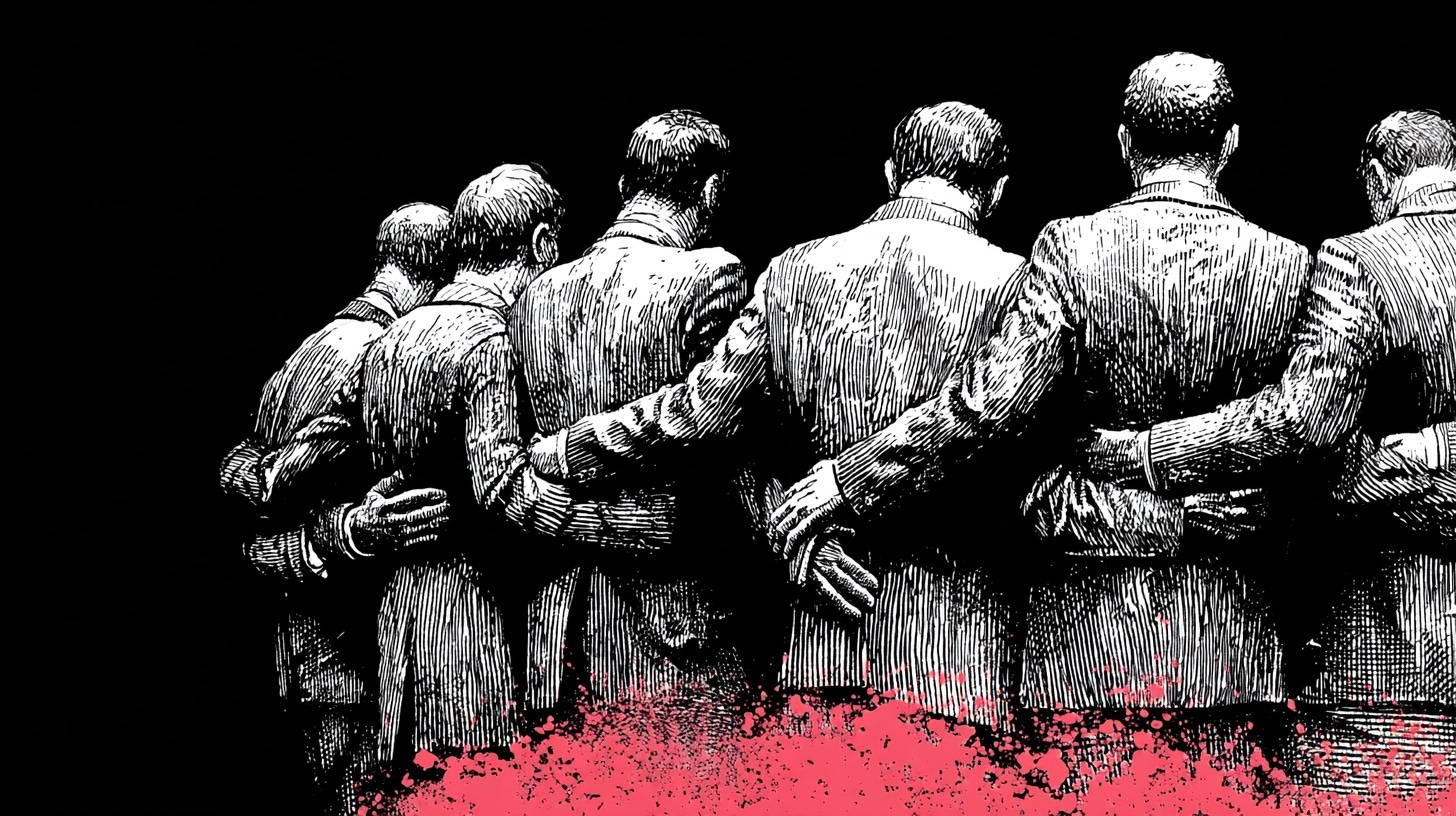
What the emails reveal, he argues, is a “borderless network of people who are more loyal to each other” than to any institution, nation, law, or ethical principle. And that loyalty—that warped solidarity—is the real subject worth interrogating.
The Network as Pathological System
To understand what Giridharadas calls the “Epstein class,” one must first resist the temptation to map it onto conventional categories. The network was not ideologically coherent: it contained Lawrence Summers and Steve Bannon, Noam Chomsky and Peter Thiel, Barack Obama’s White House counsel and the architects of Trumpism. It spanned Republicans and Democrats, financiers and professors, royalty and scientists, philanthropists and politicians. The breadth, Giridharadas argues, is the point.
What unified this seemingly incoherent cast was not shared politics, but shared status—and a shared, largely unconscious practice of what the Stanford psychologist Albert Bandura called “moral disengagement.” When Epstein, already a convicted sex offender, needed social rehabilitation after his 2008 Florida plea deal, he knew exactly where to turn: to an elite practiced at the art of not noticing inconvenient things.
“He had chosen this particular kind of social network,” Giridharadas observed, “because he could be sure that it would be able to look away.”
From a psychodynamic organizational perspective, this is a recognizable pattern. In systems theory and group psychology, what Wilfred Bion described as “basic assumption” thinking—the unconscious, primitive mental states that can overtake groups—manifests in elite networks as a collective defense mechanism: the denial of ethical reality in service of group cohesion.
The “Epstein class” did not need to consciously conspire to protect a predator.
It needed only to keep doing what it had always done: prioritize access, status, and mutual benefit while developing an extraordinary capacity to look past human suffering.
The emails’ texture bears this out in granular detail.
Giridharadas describes a ritual that repeats across thousands of messages: the “whereabouts update,” a constant stream of pings—”Just got to New York, love to meet, brainstorm”—that amount to a form of collective echolocation among members of the class, a continuous affirmation that they remain inside the network. The emails are not the correspondence of conspirators. They are the correspondence of a social organism maintaining itself, each member reinforcing the others’ sense of belonging to something larger than ordinary life, something that, by implication, exempts them from ordinary accountability.
The Perversion of Solidarity
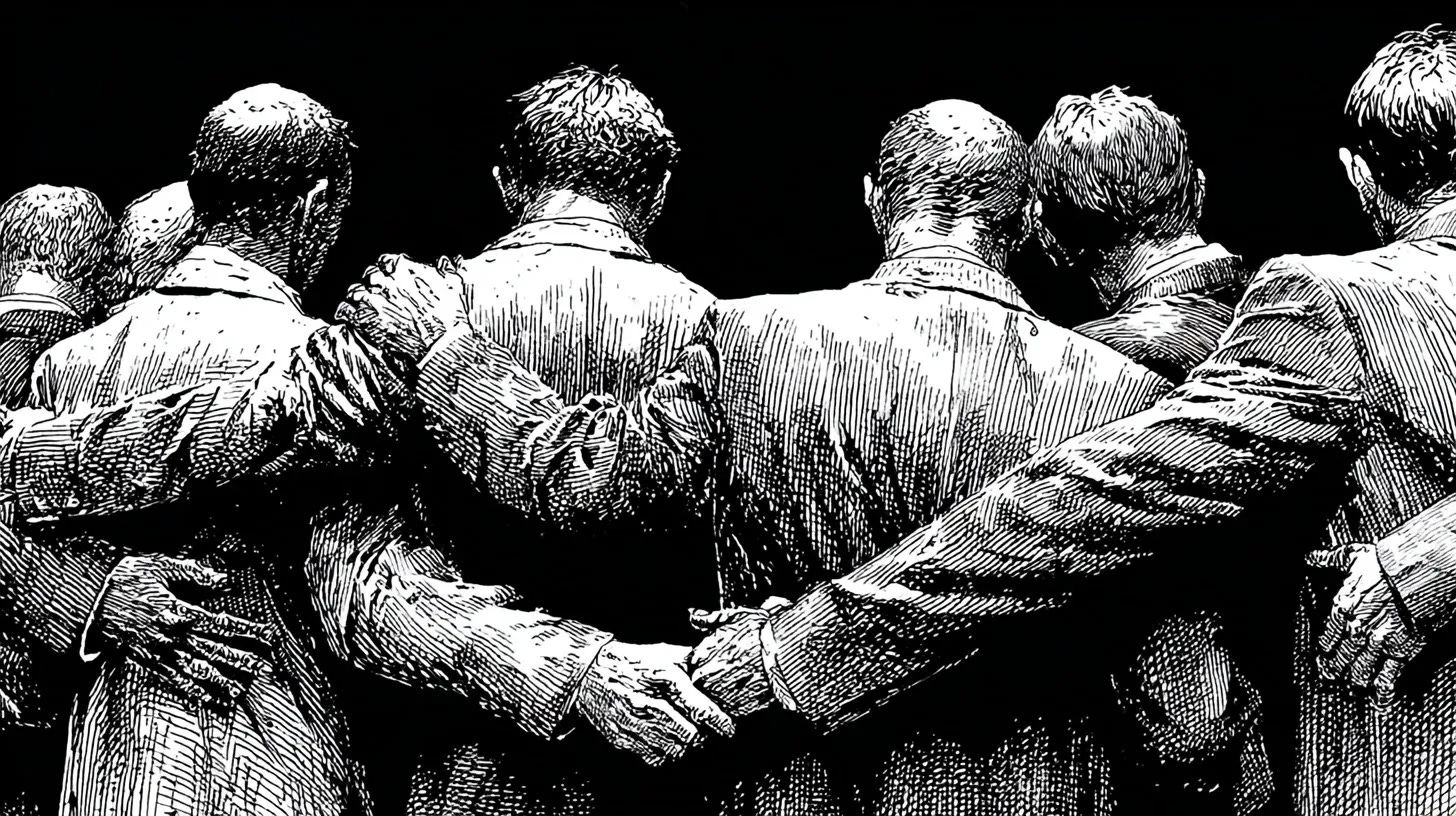
In healthy organizations and social systems, solidarity is generative. It is the glue of collective action, the psychological foundation for trust, cooperation, and shared sacrifice.
The Epstein network represents solidarity’s dark inversion: a tightly closed system in which loyalty runs exclusively inward, to the group and its members, while the outside world—including victims—is rendered invisible.
This distinction matters enormously. What the emails reveal is not a network of people who knowingly enabled rape. It is, more insidiously, a network of people who had trained themselves to simply not register the suffering of those outside their orbit. Giridharadas puts it plainly: “Many in the Epstein class worked up to disregarding Epstein’s victims by looking away at so much other abuse and suffering” long before Epstein ever entered the picture.
This is the structural design of elite impunity.
It does not require active malice in most participants. It requires only a social architecture in which the costs of looking are higher than the costs of not looking—in which raising an uncomfortable truth means losing access, invitations, deal flow, and the intoxicating proximity to power. Over time, the capacity for moral perception atrophies. The network becomes self-reinforcing not through explicit agreement but through the simple mechanics of who gets invited back and who doesn’t.
Psychiatrist and large-group theorist Vamik Volkan has described how groups seeking cohesion and legitimacy construct what he calls a “chosen glory.” In his work on collective identity, chosen glories are narratives of exceptional achievement—stories a group tells about its brilliance, heroism, or civilizational importance—that bind members together while quietly defining who falls outside the circle of moral concern. Traditionally, these narratives are attached to nations or ethnic groups. In the Epstein milieu, however, the chosen glory took a modern, technocratic form: meritocratic self-congratulation. The network understood itself as a gathering of the world’s most exceptional minds—brilliant scientists, visionary financiers, world-historical problem-solvers. This shared narrative did more than flatter its participants; it organized perception itself.
Within a culture that continually affirmed its own intellectual and moral exceptionalism, those who existed outside the charmed circle—young women without status, voice, or institutional backing—became psychologically illegible.
They were not merely ignored.
Within the group’s implicit mythology of merit and consequence, they were structurally unseeable.
The Infrastructure of Impunity
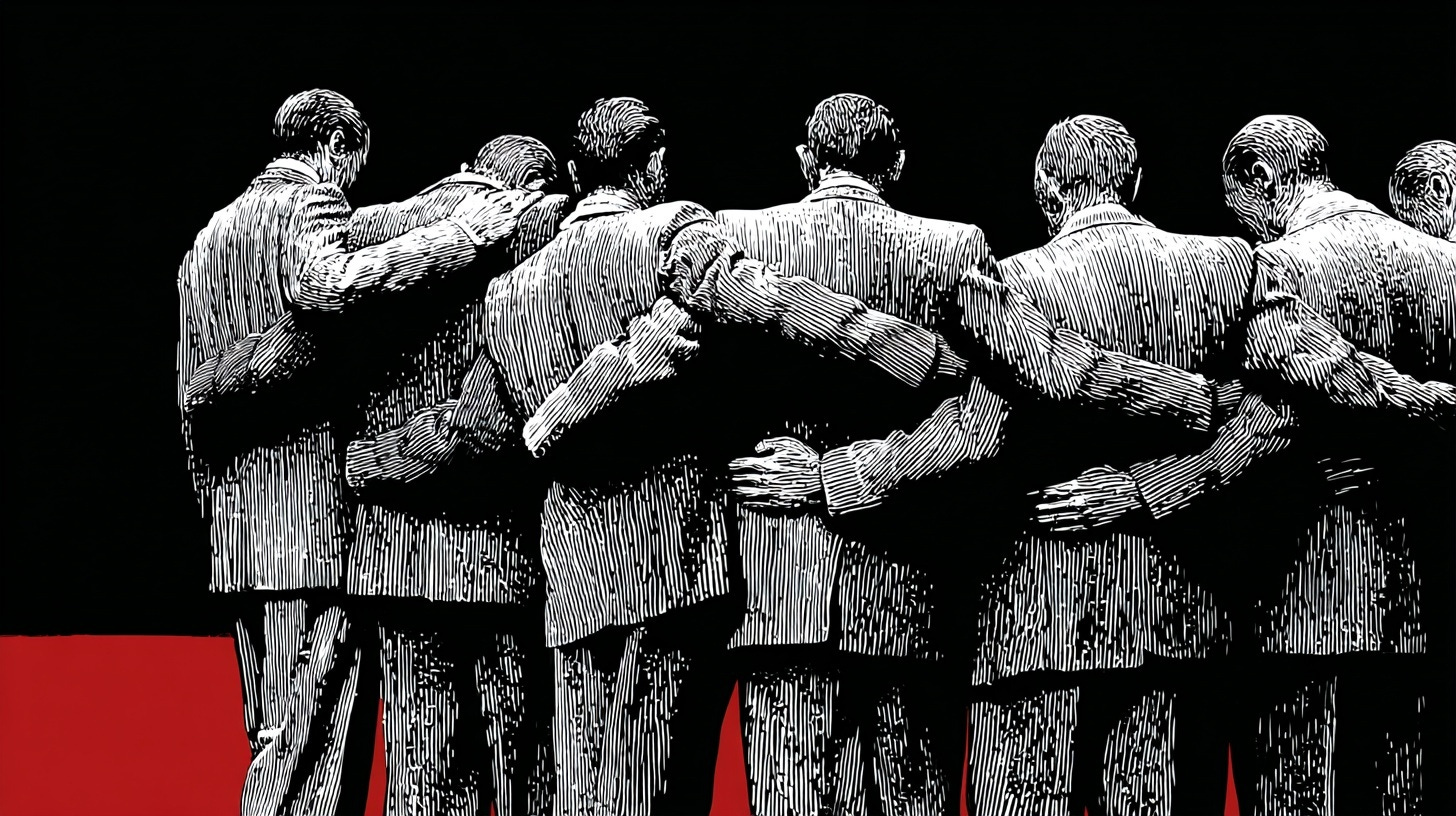
Fergus Shiel and the International Consortium of Investigative Journalists’s work on the 2017 Paradise Papers touched upon aspects of Epstein’s finances and off-shore structures, pointing to the second layer of the pathology: the institutional scaffolding that operationalized the network’s impunity. Evidence of this scaffolding goes back decades. The much-discussed 2008 plea deal stands as a glaring example. Negotiated by former US Attorney Alex Acosta—granting Epstein and his co-conspirators federal immunity in exchange for guilty pleas to lesser state charges—it was not merely a prosecutorial failure. It was a demonstration of how the network functions when activated. The deal shielded not just Epstein but a class of people whose exposure might have followed from a full federal prosecution. As the NPR investigation published in late February 2026 found, documents relating to allegations against President Trump were withheld from the publicly released files—a reminder that the structural protection of elite networks does not observe political party lines.
This is what Giridharadas means when he says the “clubby deal-making and moral racketeering of the Epstein class is now the United States’ governing philosophy.” The network did not merely protect one man. It demonstrated, repeatedly and across administrations, that a certain class of people could operate with a different set of consequences than everyone else. The mechanism is not primarily corruption in the transactional sense; it is something more like gravity—a constant, invisible force bending every institution, every process, every decision slightly in favor of those already closest to power.
Conclusion to Part I: The System Reveals Itself
The psychodynamic portrait that emerges from the Epstein emails is not, in the end, a portrait of monsters. In fact, that framing is precisely the misreading that elite networks depend upon. Monsters can be expelled. Systems cannot—they can only be understood and, with sufficient will, redesigned.
What Giridharadas’s analysis illuminates is that the Epstein network functioned as a nearly textbook example of what organizational theorists have long described as a pathological system: one in which the normal feedback mechanisms of accountability have been systematically disabled, in which the group’s survival instinct has been weaponized against moral reality, and in which the architecture of prestige itself becomes the primary instrument of impunity.
Understanding this is not merely an academic exercise. The same mechanics—moral disengagement, inverted solidarity, the invisible gravity of elite proximity—operate wherever concentrated power and institutional insularity combine. Yes, the Epstein network was an extreme case, but it was most certainly not a unique one.
Part II of this series turns from the psychodynamics of the network itself to its material and institutional context: the global business culture that made Epstein’s world possible, the corporate governance failures that rhyme structurally with his story, and the deeper question of what genuine accountability would actually require of us.
Special thanks for writer and graphic designer Christanthy Karis for bringing Giridharadas’s recent work to my attention.
References
Bandura, A. Moral Disengagement: How People Do Harm and Live with Themselves. Worth Publishers: 2015.
Bion, W. R. (1961/1969). Experiences in groups and other papers. Routledge.
Giridharadas, A. (2026, February 26). Epstein Class: What the files reveal about the global elite. WBUR On Point [Radio broadcast/podcast]. With Fergus Shiel. https://www.wbur.org/onpoint/2026/02/26/epstein-class-what-the-files-reveal-about-the-global-elite
Cohen, L. H. (2026, February 24). Ill-doing is not the province of monsters. It is the province of you and me. WBUR Cognoscenti.
Fowler, S. (2026, February 24). Justice Department withheld and removed some Epstein files related to Trump. NPR.
International Consortium of Investigative Journalists (ICIJ). https://www.icij.org
Volkan, V. D. (1997). Bloodlines: From ethnic pride to ethnic terrorism. Farrar, Straus and Giroux.
Volkan, V. D. (2018). Blind trust: Large groups and their leaders in times of crisis and terror. Pitchstone Publishing.