



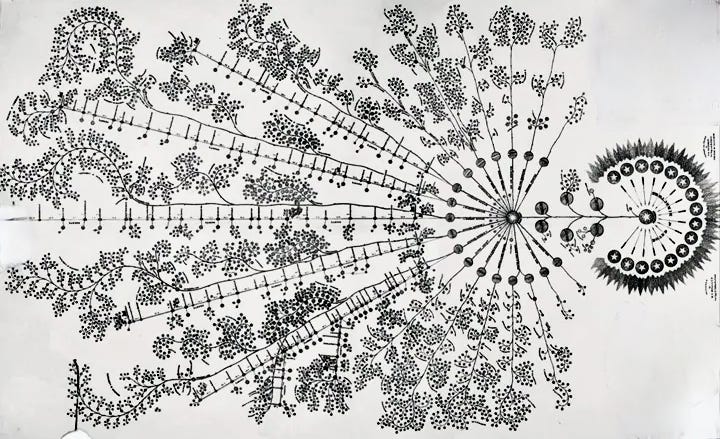
In 1855 when Daniel McCallen and George Holt Henshaw created the first organisational chart, they drew it as a plant—with leaves, stems, roots, and multiple branches, all interconnected.
They had been tasked to represent the structure and dynamics of New York’s Erie Railroad Company, a large, complex and dispersed enterprise with 500 miles of track and a geographically scattered workforce of thousands.
Only a living object, they concluded, could capture the nature of the organisation in all its complexity. And thus the first organisational chart was born.
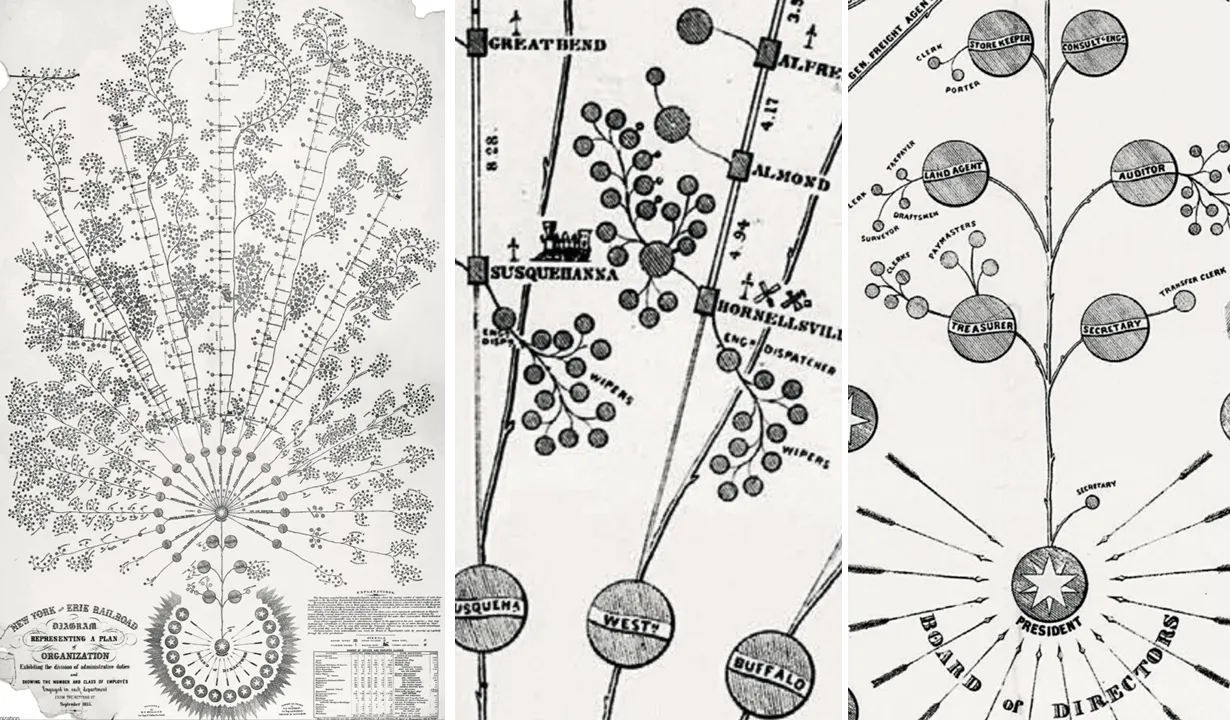
Now in 2026, organisational charts looked drastically different.
Over the past 170 plus years, McCullen and Henshaw’s impulse to render the organisation as a living thing has been blunted by the forces of rationalization. Today, an organisation is rendered more like an object or machine, void of the living pulse that permeated McCullen and Henshaw’s vision. Once a vibrant human thing, it now more closely resembles a cadaver ready for dissection and analysis—in short, for layoffs, downsizing, and restructuring.
All of this is amplified in our AI-haunted era. Plagued by anxiety over automation and loss of human agency, the modern workplace has become a pressure cooker. Leaders are asked to deliver results while holding together increasingly anxious, divided, and exhausted “systems”.
And yet, when those leaders try to understand what is happening, they rely largely on diagnostic tools designed for a different era — models that focus on structures, processes, and behaviours, while leaving aside what is hardest to see: emotion, conflict, anxiety, and the unconscious dynamics that shape collective life.
What if organisations were treated less like machines to be optimised and more like living systems that can fall ill, develop defences, and struggle with unresolved conflicts?
What if, before prescribing another transformation, leaders first learned to diagnose the psychological life of their living organisation?
These are the questions at the heart of a new diagnostic approach developed by Prof. Dr. Claas Lahmann known as Operationalised Systems Psychodynamic Organisational Diagnostics (OSPOD) — a framework that borrows rigorously from clinical psychology and applies it to organisations as living entities.
Why Organisational Change Keeps Failing
Lahmann’s research grows out of a sobering fact about organisations: only about one in three planned change initiatives succeeds. The rest either fail outright or produce superficial compliance that evaporates over time. Employees are often labelled as “resistant,” leaders as “out of touch,” and culture as “the problem.”
But as Lahmann explains, resistance, from a psychodynamic perspective, is not irrational. It is a signal.
In clinical work, resistance points to anxiety, unresolved conflict, or threatened identity. Organisations are no different. When change provokes fear — of incompetence, loss of status, or abandonment — systems develop defences. These defences can take many forms: bureaucratic rigidity, excessive harmony, blame-shifting, silence, or passive non-compliance.
Traditional diagnostic models — such as McKinsey’s 7S framework, Weisbord’s six-box model, or the Burke-Litwin model — have been enormously influential. They offer useful ways of mapping strategy, structure, leadership, and culture. But they are largely behaviourist and rationalist at heart. They describe what is happening, not why it feels so hard to change.
In today’s environment, this limitation has become increasingly costly, which sets the stage for the development of Lahmann’s new diagnostic tool.
From the Individual to the Organisation: A Clinical Inspiration
In medicine and psychotherapy, as Lahmann points out, diagnosis is never optional. A symptom is not treated without first understanding its context, severity, and underlying causes. Importantly, many psychological conditions cannot be captured through checklists or lab values alone. They require structured conversation, careful listening, and attention to what is said — and what is avoided.
One of the most widely used diagnostic frameworks in European clinical psychology is the Operationalised Psychodynamic Diagnostics (OPD). Unlike purely classificatory systems, the OPD assesses a person across four complementary dimensions: current challenges, relational patterns, unconscious conflicts, and psychological structure. It provides a multidimensional picture that guides meaningful intervention.
The insight behind Lahmann’s OSPOD is deceptively simple: if this approach works for human beings, why not adapt it for organisations?
After all, as Lahmann explains, organisations are made up of people, shaped by shared histories, and animated by emotional undercurrents. They remember crises. They develop habits of relating. They defend themselves against anxiety. In every meaningful sense, they behave like living systems.
Introducing OSPOD: Four Axes of Organisational Life
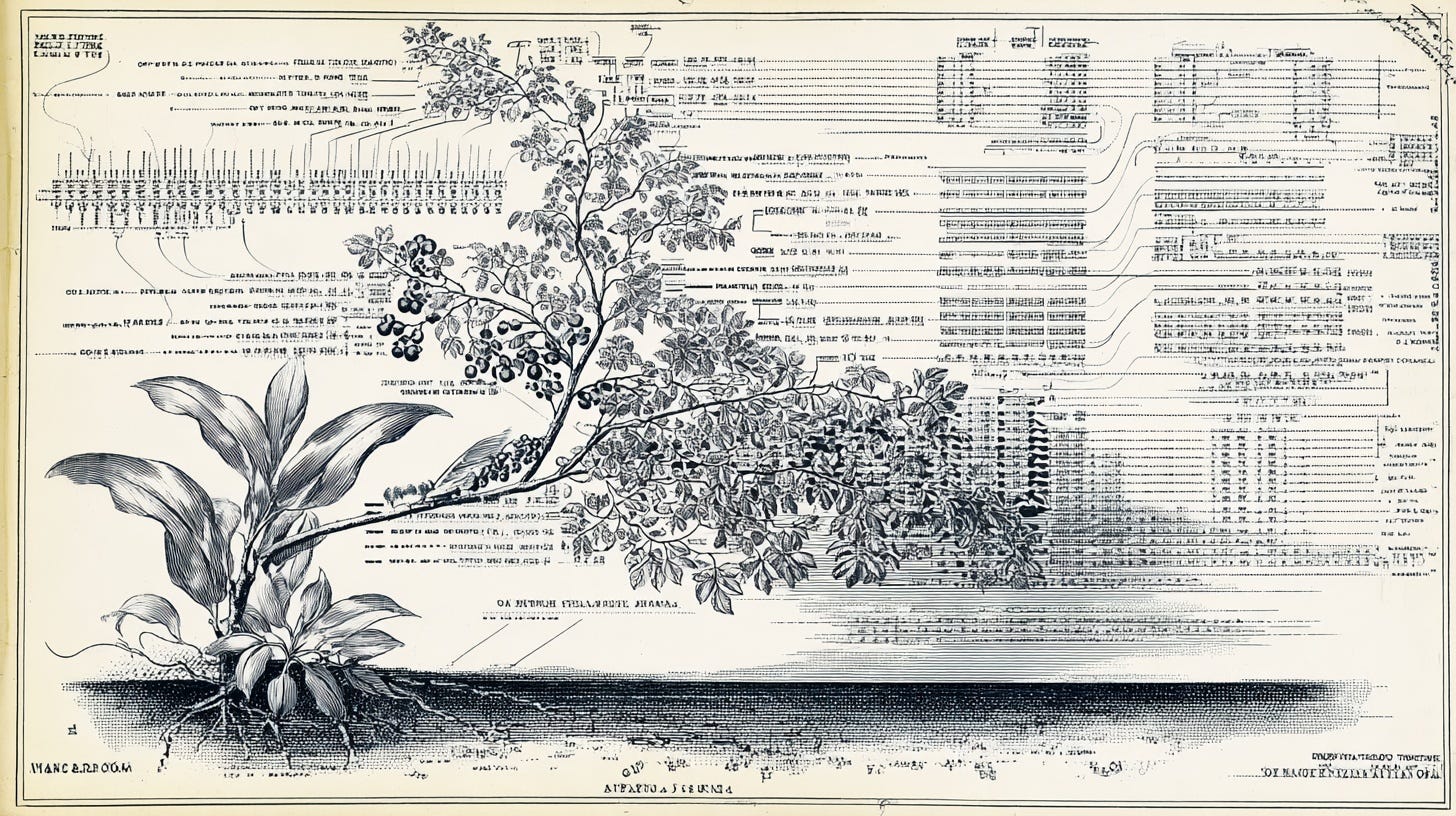
The OSPOD translates the four axes of clinical psychodynamic diagnosis into an organisational context, integrating established organisational theory with systems-psychodynamic thinking. The result is a diagnostic framework that looks beneath surface performance issues and examines the deeper structure of organisational life.
Axis I: Organisational Framework and Socio-Technical Integration
The first axis addresses the organisation’s current challenges: what hurts, how long it has hurt, and how severe the impairment is. Importantly, it distinguishes between technical problems (systems, processes), cultural issues (values, norms), and human factors (skills, relationships).
It also examines how the organisation understands its own problems. Does it frame everything as a technical issue requiring new tools? As a people problem requiring training? Or does it see itself as a socio-technical system where structure, culture, and emotion interact?
Finally, Axis I assesses readiness for change — not as a slogan, but as a realistic appraisal of resources, barriers, and the organisation’s tolerance for discomfort.
Axis II: Internal Relational Patterns and Dynamics
If Axis I asks what is happening, Axis II asks how people relate while it is happening.
Organisations are webs of relationships. How authority is exercised, how conflict is expressed (or avoided), how care and recognition are distributed — all of this shapes outcomes more powerfully than org charts suggest.
The OSPOD uses a structured relational model to map recurring interpersonal patterns within the organisation. Are relationships characterised by excessive control or excessive avoidance? By warmth that stifles disagreement? By autonomy that slides into isolation?
These patterns are assessed not abstractly, but through concrete episodes and lived experience. Over time, they form a relational “signature” that powerfully influences decision-making and change.
Axis III: Unconscious Organisational Conflicts
Perhaps the most distinctive feature of the OSPOD is its focus on unconscious organisational conflicts.
Drawing on psychodynamic theory and organisational research, the framework identifies recurring tensions such as:
dependency versus autonomy,
submission versus control,
care versus self-sufficiency,
identity coherence versus fragmentation.
These conflicts are rarely spoken about directly. Instead, they surface in repeated struggles: debates about centralisation, clashes between generations, ambivalence toward leadership, or paralysis in moments that demand decision.
Importantly, these conflicts are not pathologies. They are inherent to organisational life. Problems arise when they remain unacknowledged and acted out unconsciously.
Axis IV: Structural Capacities of the Organisation
The final axis examines the organisation’s structural “psychological” capacities: its ability to reflect on itself, regulate emotion, communicate internally and externally, form and dissolve attachments, and deploy defences flexibly rather than rigidly.
In clinical terms, this is akin to assessing psychological structure. Organisations with strong structural integration can tolerate ambiguity, hold conflict without collapse, and adapt under stress. Those with weaker integration tend to regress when pressure rises, relying on denial, blame, or rigid control.
What the Pilot Studies Revealed
Lahmann tested the OSPOD in two small and medium-sized enterprises in Germany, using a semi-structured interview format adapted from clinical practice. Interviews were conducted with senior leaders and employees, and analyses were independently rated to ensure reliability.
What emerged was striking.
In one organisation, long-standing success as a family business had created a powerful culture of care and loyalty — but also an unspoken dependency that made generational transition deeply anxiety-provoking. Employees struggled with the growing distance between leadership and workforce, while leaders underestimated the emotional impact of that distance.
In the other organisation, efforts at digital transformation triggered intense resistance that initially appeared irrational. A psychodynamic reading revealed a deeper conflict around identity and self-worth: experienced employees felt that new technologies threatened not just their skills, but their value to the organisation.
In both cases, the diagnostic process itself was experienced as meaningful. Interviewees described feeling heard, understood, and surprised by insights that traditional assessments had never surfaced.
Why This Matters Now
The timing of Lahmann’s OSPOD is not accidental.
Today’s organisations are being asked to transform continuously — while carrying unresolved emotional legacies from crises, restructurings, and rapid growth. Leaders are expected to act decisively, yet sensitively. Employees are asked to adapt, yet remain resilient.
In this context, superficial diagnostics are no longer enough.
The OSPOD does not promise quick fixes. It offers something more demanding and ultimately more valuable: understanding. By treating organisations as living systems with psychological depth, it creates the conditions for interventions that address root causes rather than symptoms.
As one insight from psychodynamic work reminds us: what is not understood will be repeated. The same is true for organisations.
Before launching the next transformation, perhaps it is time to ask a different question — not “What should we change?” but “What is this organisation trying, unconsciously, to protect?”
Only then can meaningful change begin.
Professor Dr. Claas Lahmann is the Medical Director of the Clinic for Psychosomatic Medicine and Psychotherapy at the University Medical Center Freiburg. For more information, visit his website at: https://www.uniklinik-freiburg.de/symoa/prof-lahmann.html
His thesis, “Operationalised systems psychodynamic organisational diagnostics (OSPOD): creating a diagnostic tool for the living organisation,” was submitted in August 2023 as part of the Executive Master in Change program at INSEAD.
References
Arbeitskreis OPD. (2023). Operationalized Psychodynamic Diagnosis OPD-3: Manual of diagnosis and treatment planning. Hogrefe.
Balmer, J. M. T., & Greyser, S. A. (2002). Managing the multiple identities of the corporation. California Management Review, 44(3), 72–86.
Bateson, G. (1972). Steps to an ecology of mind. University of Chicago Press.
Benjamin, L. S. (2003). Interpersonal diagnosis and treatment of personality disorders (2nd ed.). Guilford Press.
Bion, W. R. (1961). Experiences in groups. Tavistock Publications.
Bovey, W. H., & Hede, A. (2001). Resistance to organisational change: The role of defence mechanisms. Journal of Managerial Psychology, 16(7), 534–548.
Burke, W. W., & Litwin, G. H. (1992). A causal model of organizational performance and change. Journal of Management, 18(3), 523–545.
Casciaro, T., & Lobo, M. S. (2005). Competent jerks, lovable fools, and the formation of social networks. Harvard Business Review, 83(6), 92–99.
Cierpka, M., Grande, T., Rudolf, G., von der Tann, M., & Stasch, M. (2007). The operationalized psychodynamic diagnostics system. Psychopathology, 40(4), 209–220.
Daft, R. L., Murphy, J., & Willmott, H. (2020). Organization theory and design (13th ed.). Cengage Learning.
Henkel, M., et al. (2022). Reliability and validity of OPD-based diagnostics. Psychotherapy Research, 32(4), 451–464.
Jarrett, M. (2008). Organizational diagnostics: A systemic approach. INSEAD Working Paper.
Kets de Vries, M. F. R. (2004). Organizations on the couch: A clinical perspective on organizational dynamics. European Management Journal, 22(2), 183–200.
Kontoghiorghes, C., Awbrey, S. M., & Feurig, P. L. (2005). Examining the relationship between learning organization characteristics and change adaptation. Human Resource Development Quarterly, 16(2), 185–211.
McFillen, J. M., O’Neil, D. A., Balzer, W. K., & Varney, G. H. (2013). Organizational diagnosis: An evidence-based approach. Journal of Change Management, 13(2), 223–246.
Myhaylyova, Y., & Bannikova, O. (2017). Organizational memory as a strategic resource. Management Dynamics, 26(2), 47–62.
Petriglieri, G., & Petriglieri, J. L. (2020). The return of the oppressed: A systems psychodynamic perspective on organizations. Academy of Management Annals, 14(2), 411–449.
Stouten, J., Rousseau, D. M., & De Cremer, D. (2018). Successful organizational change. Journal of Management, 44(2), 752–788.
Trist, E. L. (1981). The evolution of socio-technical systems. Occasional Paper, Tavistock Institute.
Weick, K. E. (2006). Sensemaking in organizations. Sage Publications.
Weisbord, M. R. (1976). Organizational diagnosis: Six places to look for trouble with or without a theory. Group & Organization Studies, 1(4), 430–447.