



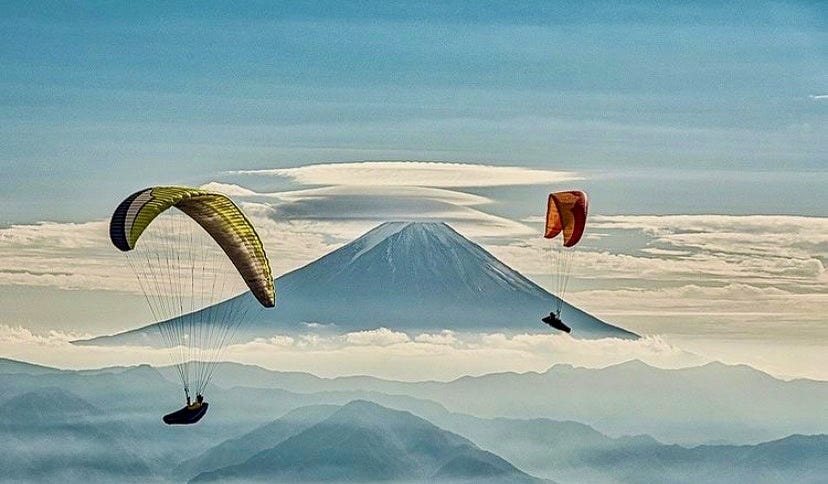
How a Japanese pilot discovered that facing fear at 10,000 feet holds lessons for anyone navigating high-stakes decisions
In an age where anxiety rates have skyrocketed and burnout has become endemic across professions, understanding how humans perform under extreme pressure has never been more urgent. While corporate leaders navigate volatile markets and healthcare workers manage life-or-death decisions daily, one group of enthusiasts has been conducting an unwitting experiment in human psychology at 10,000 feet—paraglider pilots who launch themselves into the sky with nothing but fabric and string between them and catastrophe.
A groundbreaking study by researcher and pilot Tomoko Hoshiai suggests that what happens in the minds of these free-flyers offers profound insights not just for extreme sports, but for anyone navigating high-stakes, rapidly changing environments. And the implications reach far beyond the realm of adventure sports.
The Sport That Makes Dreams—and Nightmares—Real
Paragliding transforms an ancient human fantasy into reality. More than 128,000 licensed pilots worldwide now soar for hours without engines, reading invisible rivers of air, making split-second decisions that determine whether they climb higher into the clouds or descend rapidly toward earth. It’s a sport that delivers transcendent joy and crushing disappointment, often within the same flight.
Yet despite extensive training materials covering everything from meteorology to equipment handling, few address what might be the most critical factor in safe, successful flying: the psychological forces at work in the pilot’s mind.
“Not much is discussed in training materials about the psychological factors that can influence the pilot’s behaviors and experiences,” Hoshiai writes in her recent thesis for INSEAD’s Executive Master in Change program. “And such discussions, if any, are mainly centered around how to manage fear or human factors that can cause accidents.”
This gap in understanding struck Hoshiai as not just incomplete, but potentially dangerous. As both a researcher trained in systems-psychodynamics and a pilot with nine years of experience, she set out to explore the hidden emotional landscape of free flying—and discovered patterns that illuminate how all of us function under pressure.
The Invisible System
Hoshiai’s first revelation came from mapping what she calls the “paragliding system”—a complex web of interacting forces that pilots must navigate. Unlike the relatively stable environment of an office or hospital, this system is radically temporal and unpredictable.
Weather patterns shift by the minute. Thermals—columns of rising air that pilots use to gain altitude—appear and disappear. The physical demands change constantly. Even the pilot’s internal state fluctuates rapidly as adrenaline, fatigue, and emotion cascade through their body. Every component feeds back into every other component in an intricate dance.
“The pilot is uniquely positioned as a physical object in the local airspace as well as the container of human internal factors and the interface with external elements,” Hoshiai explains. “The pilot is the very core and the catalyst of the paragliding system, because it is solely the pilot’s will and act that bring this conceptual system together and free flying to life.”
Sound familiar? Replace “airspace” with “market” or “operating room” or “battlefield,” and you have a description of high-stakes decision-making in countless contexts. The business executive, the surgeon, the military commander—all operate within similarly complex, rapidly shifting systems where they serve as both participant and catalyst.
The Möbius Strip of Human Emotion

To understand what pilots actually experience in this high-wire act, Hoshiai analyzed 41 personal narratives from experienced flyers around the world, stories that ranged from transcendent adventures to near-death experiences to the aftermath of fatal accidents. She also conducted her own series of structured emotional writing exercises about her recent flights.
What emerged was startling: ten distinct emotional themes that pilots cycle through, often multiple times within a single flight.
• Curiosity and excitement about the unknown
• Fear and anxiety about threats
• Frustration and disappointment when things go wrong
• Joy and satisfaction in achievement
• A profound sense of connectedness to nature
• The raw desire to live when facing mortality
• Pride in community and belonging
• Grief and guilt over losses
• Discovery and inspiration through working through challenges, and
• Pervasive ambivalence—wanting to flee and wanting to stay, feeling confident and doubtful simultaneously.
But what proved most revealing was the relationship between these emotions.
Hoshiai proposes that pilots’ minds operate like a Möbius strip—that mathematical curiosity where one side flows seamlessly into the other in an endless loop. Positive emotions bleed into negative ones and back again, not as opposites but as part of a single, continuous experience.
“One side and the other side are not completely separate or opposite but continuously form a single eternal surface,” she writes. “They continuously flow into one another forming circular experiences.”
This circular model challenges the typical view of emotions in our daily life, where anxiety is seen as something to eliminate and positive states become the goal. Instead, Hoshiai suggests, the tension between life-affirming and death-confronting emotions is inherent and unavoidable. The question isn’t how to escape it, but how to navigate it.
The Defenses We Build
When faced with this existential tension, the human mind does what it has always done: it deploys defenses. And this is where things get dangerous.
Through her self-reflective writing exercises, Hoshiai discovered patterns in her own flying that she hadn’t consciously recognized. She found herself gripped by competitive jealousy toward other pilots, driven by a hidden sense of inferiority. She noticed herself dissociating from obvious risks, unable to connect factual awareness with logical assessment of danger. These weren’t character flaws—they were automatic psychological mechanisms designed to protect her ego from uncomfortable truths.
One pattern revolved around what she calls “competitiveness and inferiority.” During one flight when her GPS equipment malfunctioned, instead of appreciating the experience of reaching 2,500 meters without technology, she felt only shame that others were higher. This led to an aggressive second flight where she pushed into areas she knew were risky.
“Until I did these exercises, I was not fully aware that I am this deeply governed by jealousy and competitiveness towards others due to a suppressed sense of inferiority,” she writes. The root, she discovered through deeper reflection, lay partly in experiences of being marginalized as a woman in both her business career and in flying—a smaller pilot with fewer equipment options, unconsciously projecting suppressed anger onto others.
Another pattern centered on what she terms “fate for failure”—an unconscious belief that she was destined to fail at paragliding, rooted in a teenage sports injury that ended her track and field career. This hidden conviction led her to dissociate from risks even when she intellectually recognized the danger, a defense mechanism that ironically made accidents more likely.
Writing as a Window to the Hidden Self
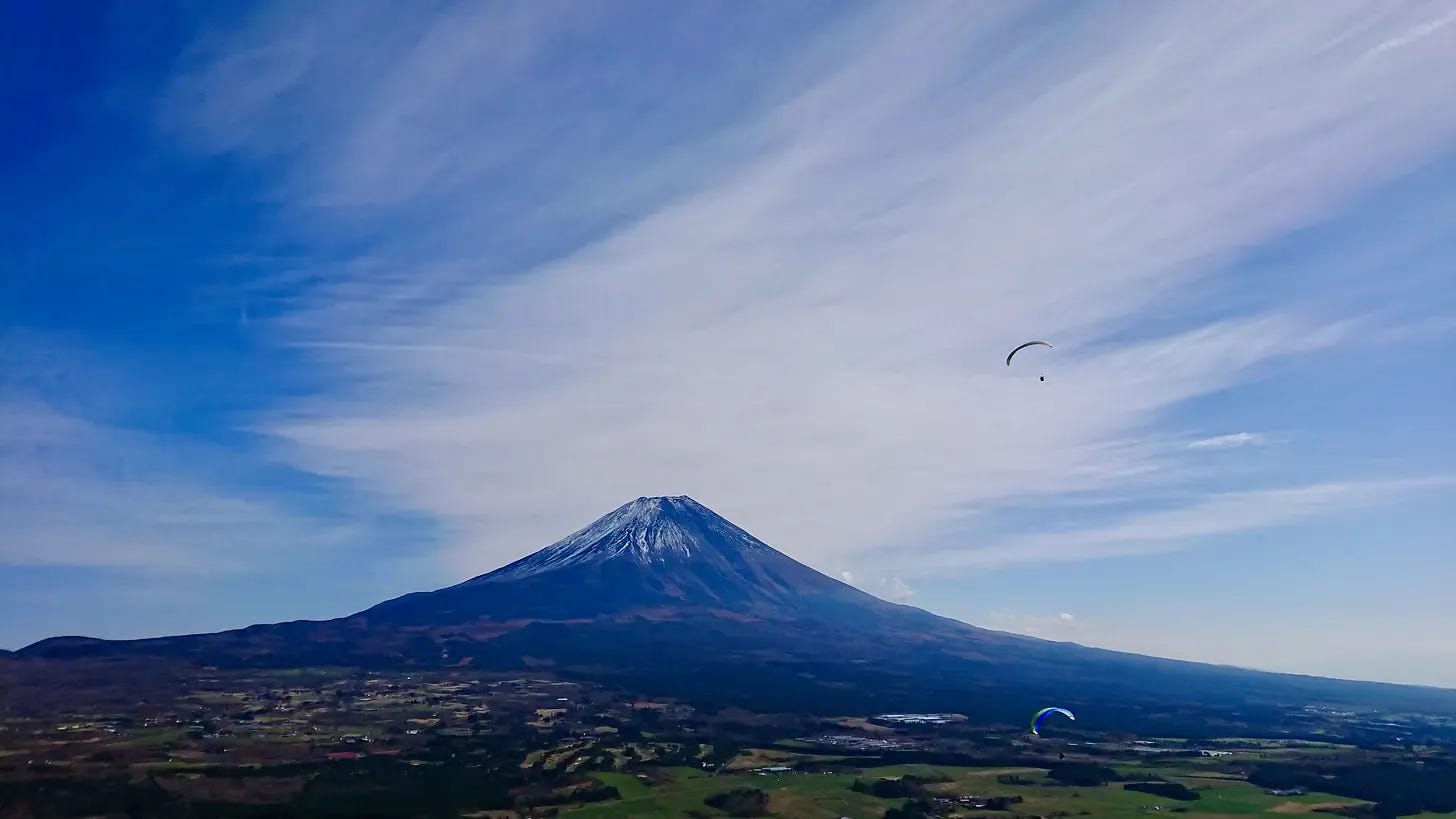
Hoshiai’s tool for uncovering these patterns was deceptively simple: structured expressive writing. Following established psychological research protocols, she wrote about her emotional experiences around specific flights, beginning with body awareness exercises and progressing through meaningfulness, integration, and discovery.
The benefits proved substantial. She developed an awareness of recurring emotional patterns. She surfaced difficult thoughts from her past that were unconsciously driving current behaviors. She gained new perspectives that changed how she approached flying. She learned to recognize when she was deploying maladaptive defenses.
“Unpacking the unpleasant and unexpected parts of me was fairly scary and demanding,” she admits. “Some of the discoveries were felt to be too hot to handle, but others, once put on the paper, felt like ‘maybe I can handle that differently going forward.’”
This mirrors findings from sports psychology research showing that expressive writing helps athletes re-evaluate stressors, develop self-awareness, manage emotions, and improve performance. But it also challenges the typical approach in high-stakes environments, where emotions—especially difficult ones like fear, shame, and grief—are often seen as obstacles to be suppressed rather than resources to be understood.
Lessons for Life on the Ground
The parallels to other high-pressure contexts are unmistakable. Business leaders navigating market volatility, healthcare workers managing crises, anyone making consequential decisions in uncertain environments—all operate within complex systems where emotions run high and defensive patterns can emerge unconsciously.
Hoshiai identifies three implications from her research that extend well beyond paragliding:
First, self-awareness over ignorance. Understanding one’s hidden emotional drivers—even when they seem illogical—creates the possibility of challenging misplaced forces and gaining new insights. Awareness doesn’t solve everything, but it offers a fighting chance at more realistic decision-making and better outcomes.
Second, relationship over isolation. The emotional lives of pilots were rich with connections—to other pilots, to nature, to their own inner experience. In an era of increasing isolation and remote work, this reminder of relationship as central to wellbeing and performance feels urgent.
Third, embracing wholeness over splitting. The tendency under stress is to divide the world into all-good and all-bad, to deny the shadow side of our endeavors. But the dark side is integral to any meaningful pursuit. Acknowledging that both positive and negative aspects reside within ourselves and our work is essential before taking on any challenge.
The Moment of Truth

Perhaps most intriguingly, Hoshiai describes moments when pilots transcend the tension of the Möbius strip entirely—when they experience what she calls a “connectedness to nature” so profound that boundaries dissolve.
“Pilots can feel so tiny in front of nature, sometimes losing their sense of any separation between the internal and the external, between the positive and the negative—feeling the wholeness of universe,” she writes.
These moments of sublimation, she hypothesizes, represent what draws pilots back to the sport despite—or perhaps because of—its inherent dangers.
They’re not escaping the tension between life and death, but rather experiencing both fully, finding in that totality something approaching truth.
In one of her own writing exercises, reflecting on a calm evening flight, Hoshiai writes of “a sense of reincarnation in the universe that I am part of.” It’s the kind of statement that might seem mystical or overwrought—until you recognize it as describing something many of us seek in our own high-stakes pursuits: not just success or achievement, but a moment of feeling fully alive within systems larger than ourselves.
Coming Back to Earth
As workplace stress reaches crisis levels and the pace of change continues accelerating, Hoshiai’s research offers an unexpected gift. By studying people who voluntarily put themselves into extreme situations, she’s illuminated psychological patterns that operate in all of us under pressure—the defenses we build, the emotions we suppress, the circular tensions we navigate.
Her prescription is both simple and demanding: structured reflection, emotional awareness, and the courage to surface what we’d rather keep hidden. Not because it feels good—it often doesn’t—but because unexamined patterns can lead us into danger, whether that’s crashing a paraglider or making catastrophic decisions in other high-stakes contexts.
Today, the pilots who inspired Hoshiai’s research continue to launch themselves into uncertain skies, not despite the existential tension but because of it—seeking in that space between earth and heaven, between life and death, between fear and joy, something approaching a moment of truth about what it means to be fully human.
The rest of us, even with feet on solid ground, might have something to learn from their flight path.
The research discussed is based on Tomoko Hoshiai’s thesis “Paraglider Pilots’ Emotional Experiences in the Flying System: A Systems-Psychodynamic Inquiry into the Hidden Source for Human Flying” completed in 2024 as part of INSEAD’s Executive Master in Change.
References
Baikie, K. A., & Wilhelm, K. (2005). Emotional and physical health benefits of expressive writing. Advances in Psychiatric Treatment, 11, 338-346.
Craig, A. & Miller, H. (Eds.). (2023). Head in the Clouds: The Best Stories from 50 Years of Free Flying. Lewes: Cross Country International.
Frattaroli, J. (2006). Experimental disclosure and its moderators: a meta-analysis. Psychological Bulletin, 132, 823-865.
Hanin, Y. L. (2000). Individual zones of optimal functioning (IZOF) model: Emotion-performance relationships in sport. In Y. L. Hanin (Ed.), Emotions in Sport (pp. 65–89). IL: Human Kinetics.
Hoshiai, T. (2024). Paraglider Pilots’ Emotional Experiences in the Flying System: A Systems-Psychodynamic Inquiry into the Hidden Source for Human Flying. [Master’s thesis, INSEAD Executive Master in Change].
Hudson, J. & Day, M. C. (2012). Athletes’ experiences of expressive writing about sports stressors. Psychology of Sport and Exercise, 13, 798-806.
Milton, J., Polmear, C., & Fabricius, J. (2011). A Short Introduction to Psychoanalysis (2nd ed.). London: SAGE Publications.
Pennebaker, J.W., & Evans, F. J. (2014). Expressive Writing: Words That Heal. IN: Idyll Arbor.
Petriglieri, G. & Petriglieri, J. L. (2020). The return of the oppressed: A systems psychodynamic approach to organization studies. The Academy of Management Annals, 14(1), 411-449.
Robazza, C., & Ruiz, M. C. (2022). Why study emotions in sport? Psychology of Sport and Exercise, 61, Article 102213.
Robazza, C., Ruiz, M. C., & Bortoli, L. (2021). Psychobiosocial experiences in sport: Development and initial validation of a semantic differential scale. Psychology of Sport and Exercise, 55, Article 101963.
Senerman, R. (2022). The Reflection in the Paper: Reducing Anxiety and Increasing Self-Reflection. In E. Florent-Treacy (Ed.), Hidden Challenges Human Dynamics in Organizational Change and Recovery (pp. 131-158). NY: Business Expert Press, LLC.
Sher, M., & Lawlor, D. (2022). An Introduction to Systems Psychodynamics: Consultancy Research and Training. London and New York: Routledge.
Stein, S. J. & Book, H. E. (2011). The EQ Edge: Emotional Intelligence and Your Success (3rd ed.). Ontario: Jossey-Bass.