



In the past few years, workplaces have absorbed shocks that once seemed unimaginable. A global pandemic normalized daily death counts on the evening news. Wars returned to Europe and the Middle East with brutal visibility. Mass layoffs arrived at by algorithm, not conversation. Artificial intelligence accelerated work while hollowing out old certainties about identity and purpose. In many organizations, employees are being asked—implicitly or explicitly—to bring their “whole selves” to work, while simultaneously being expected to remain endlessly productive, resilient, and emotionally contained.
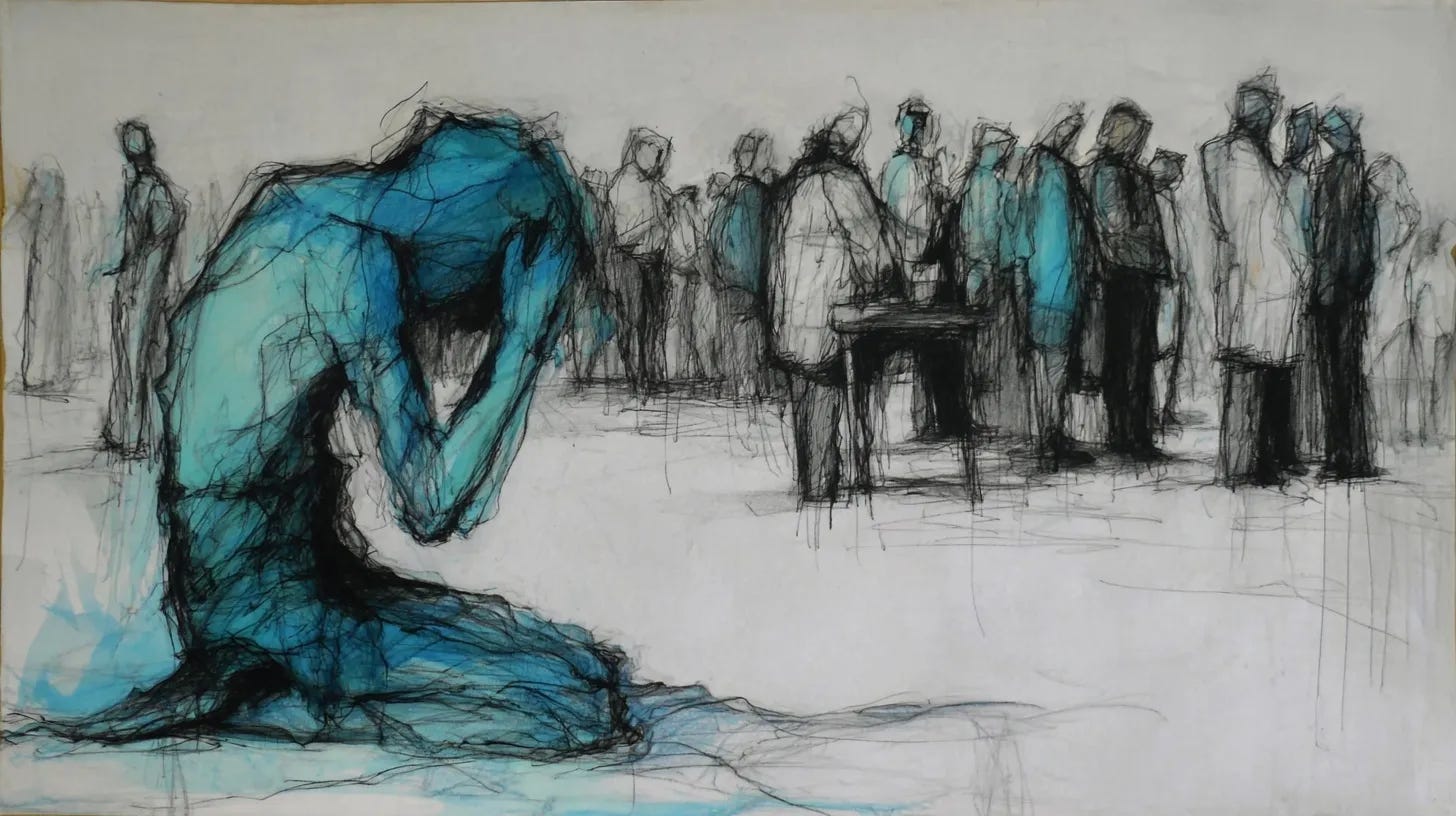
Against this backdrop, a quieter crisis unfolds every day inside offices, factories, hospitals, and Zoom calls. Someone returns to work only a few days after burying a partner, a child, or a parent—unless they call in sick, citing depression or another reason. Once back at work, their calendar fills again. Meetings resume. Messages pile up. Nothing is said. Everyone notices. No one speaks.
This is the world of hidden grief at work—a phenomenon that affects nearly everyone, yet remains largely unacknowledged. A study conducted by INSEAD Executive Master in Change researcher Clemente Pinedo entitled The Impact of Hidden Grief on Organizations offers a rare and unsettling look inside this silence. Drawing on in-depth interviews with bereaved employees and their managers, Pinedo’s research exposes not only the human cost of ignoring grief, but also the unconscious forces that drive organizations to look away.
Grief is everywhere—and nowhere
Death is the only certainty of life, yet modern Western workplaces behave as if grief were an anomaly rather than an inevitability. Research consistently shows that almost every employee will experience the death of a close family member during their working life. Still, grief is treated as a private disruption—something to be managed quickly and discreetly, preferably outside office hours.
Most bereavement policies reflect this mindset. In the United States and much of Europe, employees are typically granted three to five days of paid leave after the death of a close relative. These days are usually sufficient to arrange a funeral—but not to grieve. Psychological research suggests that mourning often unfolds over months or years, not days. Yet the unspoken organizational message is clear: take care of it quickly, then come back as before.
The result is a growing population of employees who are physically present at work but psychologically elsewhere—exhausted, distracted, emotionally raw. Economists call this “presenteeism.” Colleagues sense it. Managers struggle with it. Organizations pay for it. And still, the subject remains taboo.
Listening to the bereaved—and those around them

Against this backdrop in which discussions of death and bereavement taboo, Pinedo’s study took an unusual approach. Rather than surveying HR policies or analyzing productivity metrics alone, it listens carefully to lived experience. Pinedo conducted 18 in-depth interviews: nine with employees who had lost a partner, child, or parent, and nine with their managers or close coworkers.
What emerged were five recurring themes that illuminate how grief actually plays out inside organizations.
1. Work as therapy—and as refuge
For many bereaved employees, returning to work serves as an anchor. Several interviewees used this exact word. Work provided structure when everything else felt chaotic. It offered distraction from the loneliness of home, a reason to get out of bed, and sometimes a sense of competence when life elsewhere felt shattered.
“I needed something predictable,” one participant explained. “Otherwise I would just be floating.”
But this apparent functionality can be misleading. From a psychodynamic perspective, work-as-anchor can also operate as a defense—a way of postponing the full emotional impact of loss. By immersing themselves in tasks, deadlines, or responsibility, employees may delay confronting grief rather than integrating it.
Organizations often welcome this behavior, interpreting it as resilience or commitment. In reality, it can mask deeper distress that resurfaces later—sometimes as burnout, disengagement, or sudden exit.
2. Two realities, one return to work
A striking finding of the study is how differently the same return-to-work experience is perceived by bereaved employees and by their managers.
Many employees believed they were functioning reasonably well within weeks. Managers and coworkers, however, often described a much longer period of reduced capacity—four, six, even nine months before full effectiveness returned.
This mismatch is not simply about memory or performance metrics. Psychologically, grief disrupts self-perception. When people are operating at 30 percent of their usual capacity, but giving everything they have, it feels like 100 percent. Effort replaces outcome as the internal yardstick.
Without open conversation, these parallel realities remain unexamined, breeding frustration, guilt, or silent judgment on both sides.
3. The elephant in the room
Nearly every interview touched on the same phenomenon: silence.
Colleagues avoided mentioning the death for fear of saying the wrong thing. Managers worried about triggering emotion they didn’t know how to contain. Bereaved employees themselves often chose not to speak, afraid of appearing weak, unprofessional, or burdensome. Some of them, when they did speak, did not display any emotion or empathy after a while, as if they felt compelled to show that life must gone on.
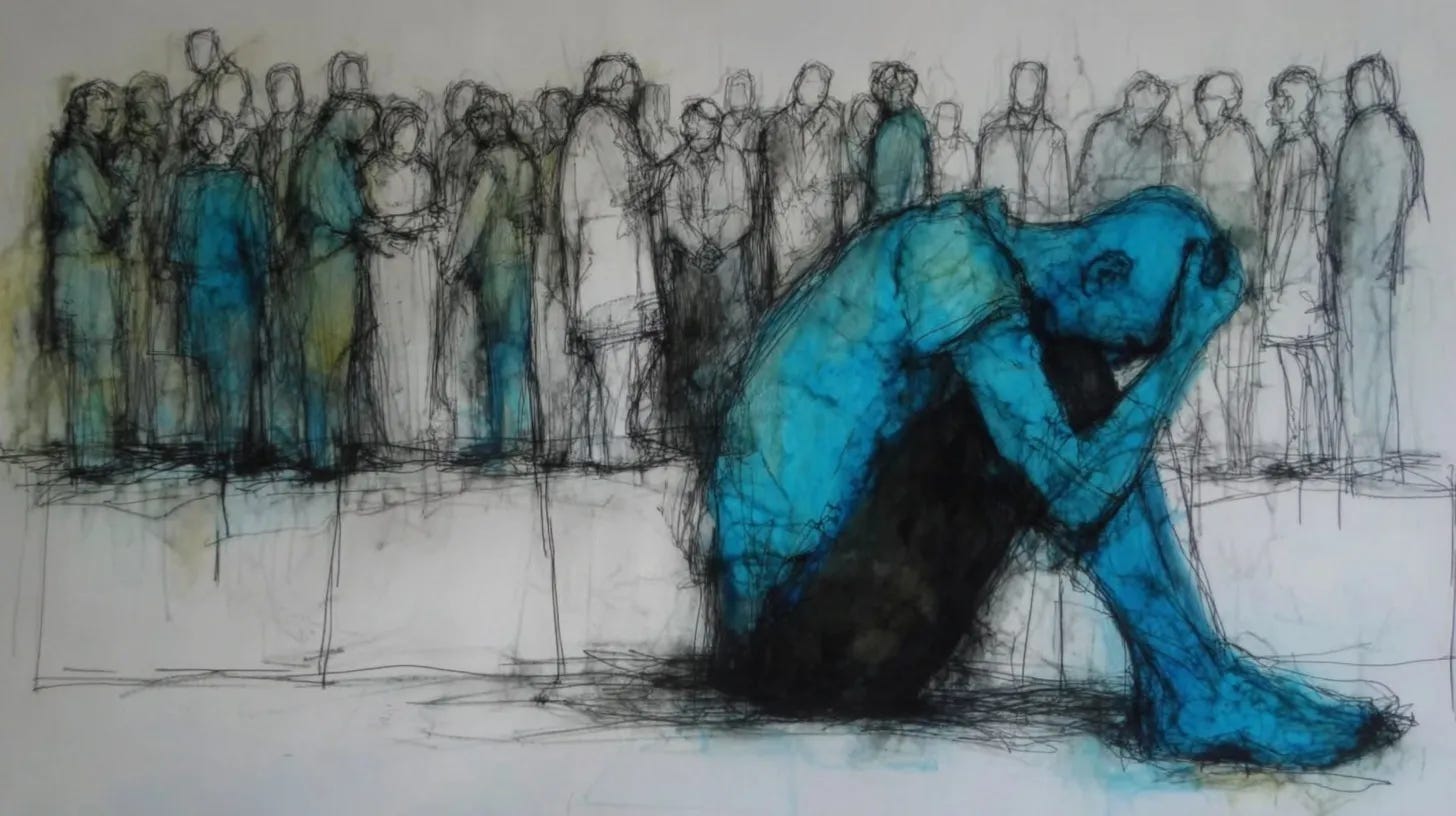
The result is what organizational psychologists call the “elephant in the room”: a shared awareness of something important that no one names. This silence is not neutral. It is actively stressful. It forces grieving employees to manage not only their loss, but also the emotional comfort of those around them.
From a systems psychodynamic perspective, this avoidance functions as a social defense. By not talking about death, organizations protect themselves from anxiety, vulnerability, and the fear of emotional contagion—at the cost of genuine support.
4. Grief changes leaders
One of the most unexpected findings of the research is how often deep loss reshaped people into better leaders.
Managers who had experienced bereavement described becoming more patient, empathetic, and emotionally available. Coworkers noticed increased maturity, clarity, and resilience. In some cases, grief accelerated the development of human skills that improved their leadership capability rather than derailing it.
This aligns with broader research on post-traumatic growth. When loss is acknowledged and integrated—rather than suppressed—it can deepen self-awareness and emotional intelligence. Organizations that support employees through grief may ultimately benefit from these transformations.
But this potential is fragile. Without support, grief can just as easily erode confidence, trust, and engagement. It can also decrease talent retention.
5. The missing protocols
Perhaps the most telling finding is what didn’t exist in any of the organizations studied: clear grief protocols.
Managers of the bereavers were left to improvise. Some responded with compassion and flexibility. Others defaulted to silence or rigid expectations. Employees described this as a lottery: support depended entirely on who your manager happened to be and their emotional capability.
Several participants warned that “common sense” is not enough. Untrained responses—however well intentioned—can unintentionally harm. Yet few organizations provide training on how to support grieving employees, despite branding themselves as “people-centered.”
A notable exception is the pioneering work of INSEAD, which has recently launched the first Compassionate Protocols in Europe, a programme that was supported by Clemente Pinedo’s expertise.
Why organizations look away
If grief is universal, and its costs are well documented, why do organizations continue to avoid it?
The answer may lie beneath the surface. Psychodynamically, grief confronts organizations with everything they try to deny: vulnerability, dependency, loss of control, and the limits of productivity. Acknowledging grief risks slowing down, softening boundaries, and admitting that human beings cannot always perform on command.
Silence becomes a form of protection—not just for individuals, but for the system itself.
Yet this protection is illusory. Studies estimate that unaddressed grief costs organizations tens of billions of dollars annually through presenteeism, absenteeism, turnover, and disengagement. More importantly, it corrodes trust. Employees remember how they were treated when they were most vulnerable.
What a grief-literate workplace looks like
The research does not argue for endless leave or lowered standards. Instead, it points toward something more subtle—and more powerful: normalization.
Grief-literate organizations recognize that loss is part of working life. They equip managers with language, not scripts. They allow flexibility without stigma. They check in over time, not just once. They make it permissible to say, “This is hard.”
Such workplaces do not collapse under emotion. They become more resilient precisely because they can hold it.
The human future of work
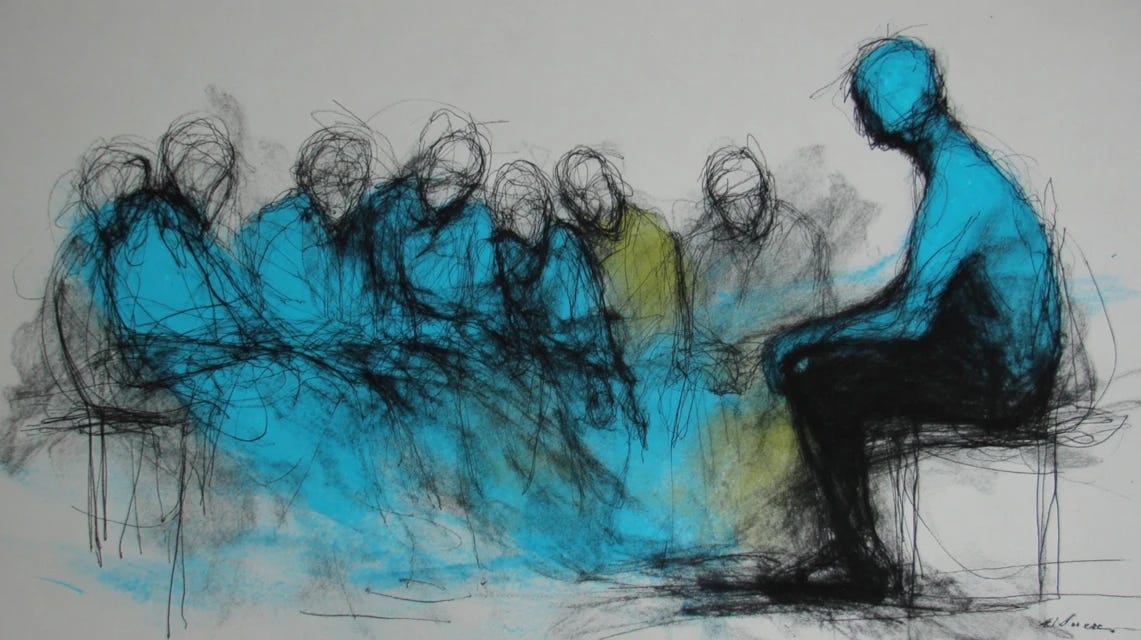
As work accelerates and technology reshapes how we live and labor, the temptation to treat grief as an inconvenience will only grow. But the evidence is clear: ignoring loss does not make it disappear. It drives it underground, where it quietly drains energy, meaning, and connection.
The question facing organizations today is not whether grief belongs at work. It already does.
The real question is whether leaders are willing to see it—and what kind of workplaces we want to build if they do.
This research discussed is based on Clemente Pinedo’s thesis “The Impact of Hidden Grief on Organizations: A Psychodynamic Perspective on the Return to Work After a Severe Loss” completed in 2023 as part of INSEAD Executive Master in Change.
References
Abrams, R., & Ashforth, B. E. (2012). Identity-based organizational stress: Why employees experience stress at work. Academy of Management Review, 37(3), 476–497.
Ashforth, B. E., & Humphrey, R. H. (1993). Emotional labor in service roles: The influence of identity. Academy of Management Review, 18(1), 88–115.
Bakker, A. B., & Demerouti, E. (2017). Job demands–resources theory: Taking stock and looking forward. Journal of Occupational Health Psychology, 22(3), 273–285.
Barclay, S., & Kang, H. (2019). Workplace responses to employee bereavement: A review and research agenda. Human Resource Management Review, 29(3), 1–14.
Bento, R. F. (1994). When the show must go on: Disenfranchised grief in organizations. Journal of Managerial Psychology, 9(6), 35–44.
Blackburn, C., & Bulsara, C. (2018). Workplace experiences of employees who are bereaved. Journal of Occupational Rehabilitation, 28, 193–206.
Bonanno, G. A. (2004). Loss, trauma, and human resilience. American Psychologist, 59(1), 20–28.
Bonanno, G. A., & Kaltman, S. (2001). The varieties of grief experience. Clinical Psychology Review, 21(5), 705–734.
Charles-Edwards, D. (2009). Workplace support following bereavement: A review. Death Studies, 33(6), 512–528.
Ciulla, J. B. (2000). The working life: The promise and betrayal of modern work. New York: Times Books.
Doka, K. J. (1989). Disenfranchised grief: Recognizing hidden sorrow. Lexington, MA: Lexington Books.
Dyregrov, K., Dyregrov, A., & Kristensen, P. (2016). What constitutes helpful support after the loss of a close person? OMEGA – Journal of Death and Dying, 72(4), 297–319.
Eyetsemitan, F. (1998). Stifled grief in the workplace. Death Studies, 22(5), 469–479.
Ferreira, A. I., & Torkomian, A. L. (2018). Grief and loss in the workplace: A multi-level perspective. Journal of Organizational Effectiveness, 5(4), 350–365.
Grandey, A. A. (2003). When “the show must go on”: Surface acting and deep acting as determinants of emotional exhaustion. Academy of Management Journal, 46(1), 86–96.
Hazen, M. A. (2003). Disenfranchised grief at work. Journal of Organizational Change Management, 16(1), 49–61.
Hazen, M. A. (2008). Grief and the workplace. Human Relations, 61(9), 1247–1266.
Kets de Vries, M. F. R. (2006). The leader on the couch: A clinical approach to changing people and organizations. San Francisco: Jossey-Bass.
Kübler-Ross, E. (1975). Death: The final stage of growth. New York: Simon & Schuster.
Maciejewski, P. K., Zhang, B., Block, S. D., & Prigerson, H. G. (2007). An empirical examination of the stage theory of grief. JAMA, 297(7), 716–723.
Petriglieri, J. L. (2011). Under threat: Responses to identity threat in organizations. Academy of Management Review, 36(4), 641–662.
Petriglieri, G., & Petriglieri, J. L. (2020). Holding environments at work. Organization Studies, 41(2), 1–24.
Pratt, M. G., Rockmann, K. W., & Kaufmann, J. B. (2006). Constructing professional identity: The role of work and identity learning cycles. Academy of Management Journal, 49(2), 235–262.
Stroebe, M., Stroebe, W., & Hansson, R. (1993). Handbook of bereavement: Theory, research, and intervention. Cambridge: Cambridge University Press.
Thompson, N., & Bevan, D. (2015). Grief in the workplace: Absence, presenteeism, and emotional labour. Journal of Occupational Health Psychology, 20(3), 356–367.
Zisook, S., & Shear, K. (2009). Grief and bereavement: What psychiatrists need to know. Dialogues in Clinical Neuroscience, 11(2), 67–80.