



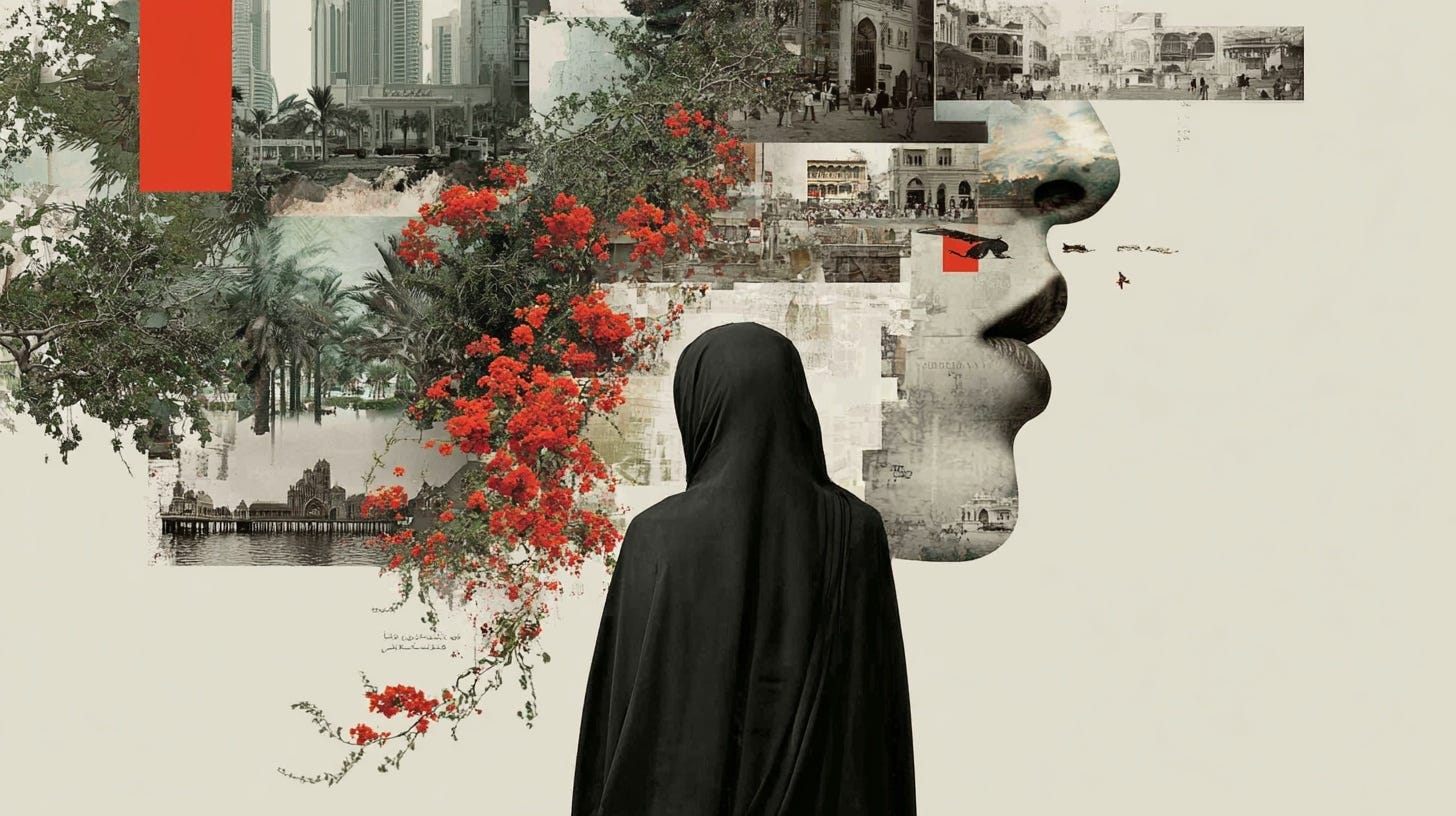
In just five decades, the UAE has been transformed from desert settlements to a global powerhouse. Now, Emirati women are writing the next chapter—not by choosing between tradition and progress, but by honoring both.
In January 2026, the United Arab Emirates stands as a remarkable example of transformation in the Middle East. Women comprise 66% of the government workforce and hold positions from cabinet ministers to airline executives. These aren’t just statistics—they represent real women navigating an extraordinary moment in history, one that offers valuable insights for working women everywhere.
Sarah Al Bakeri, an Emirati HR professional, thought leader and alumna of INSEAD’s Executive Masters in Change, wanted to understand what this transformation actually feels like from the inside. As someone who has lived these changes herself, she recognized that behind every success story lies a human experience worth exploring and learning from.
Her research, involving in-depth conversations with Emirati professional women, reveals something profound: these women aren’t just adapting to change—they’re actively creating new models of leadership that integrate professional excellence with cultural authenticity and family devotion.
A Nation Writing Its Own Story
To appreciate what Emirati women are accomplishing, consider the remarkable timeline. The UAE celebrated its 50th anniversary just five years ago. This is a nation younger than many of its citizens, where grandmothers remember a time before oil transformed their world.
The late Sheikh Zayed bin Sultan Al Nahyan, the nation’s founding father, understood that true progress requires including everyone. “The woman is half of the society,” he declared. “Any country which pursues development should not leave her in poverty or illiteracy.”
His vision has borne fruit in ways both visible and profound. Where tradition once limited women’s roles, they now pilot commercial aircraft, engineer skyscrapers, and shape national policy.
But what makes their journey particularly instructive is how they’re achieving this in a unique context: Emiratis represent only 12% of the UAE’s population, with the remaining 88% being expatriates from around the world.
This diversity has created something unprecedented—a laboratory for cultural integration where Emirati women are pioneering new ways to honor heritage while embracing innovation.
The Art of Integration
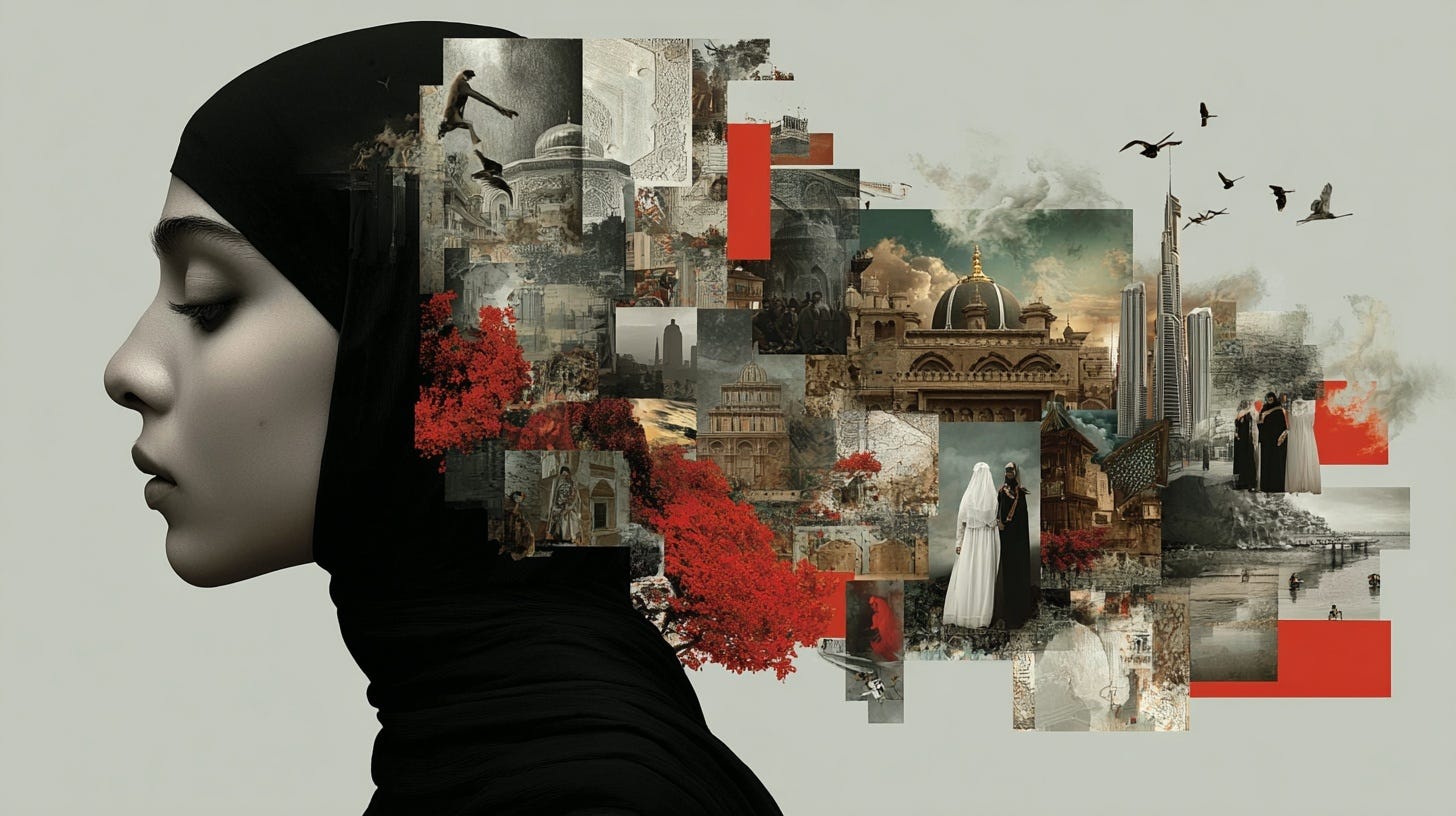
Through conversations with four accomplished Emirati professional women—all mothers, all in leadership roles—Al Bakeri discovered women who are masters of integration rather than compromise. These aren’t women torn between competing identities; they’re women actively creating something new.
“Everyone is expecting me to be there for them and perform 100% with no excuses,” one participant shared, describing not a burden but a testament to how much people rely on and believe in these women’s capabilities.
One vice president with six children described colleagues’ amazement at her ability to excel in both domains. Rather than viewing this as skepticism, she’s reframing it as an opportunity to demonstrate what’s possible.
“The expectation is that a mother has the responsibility of taking care of the family and that those who strive to balance that with a successful career are assumed to be neglecting something,” she noted. “But we’re proving that’s a false choice.”
These women are showing that high performance at work and deep family commitment aren’t mutually exclusive—they’re complementary expressions of the same values: dedication, excellence, and love.
Discovering the Power of Self-Care
One of the most significant shifts happening among Emirati professional women involves redefining self-care—not as selfishness, but as sustainable leadership.
When Al Bakeri asked about “me time,” many women initially struggled with the concept. “I didn’t have the awareness and the priority to look after my health,” one woman reflected, describing her past rather than her present. The shift in awareness itself represents progress.
One recently retired woman now dedicates one week per year to solo travel. “I have to walk 15,000 steps a day and it’s a must for me,” she said. This isn’t about abandoning family—it’s about modeling healthy boundaries for the next generation.
These conversations are opening new possibilities. Women are beginning to see self-care not as a luxury but as essential maintenance that enables them to show up fully for everyone who depends on them.
Evolution of Empowerment
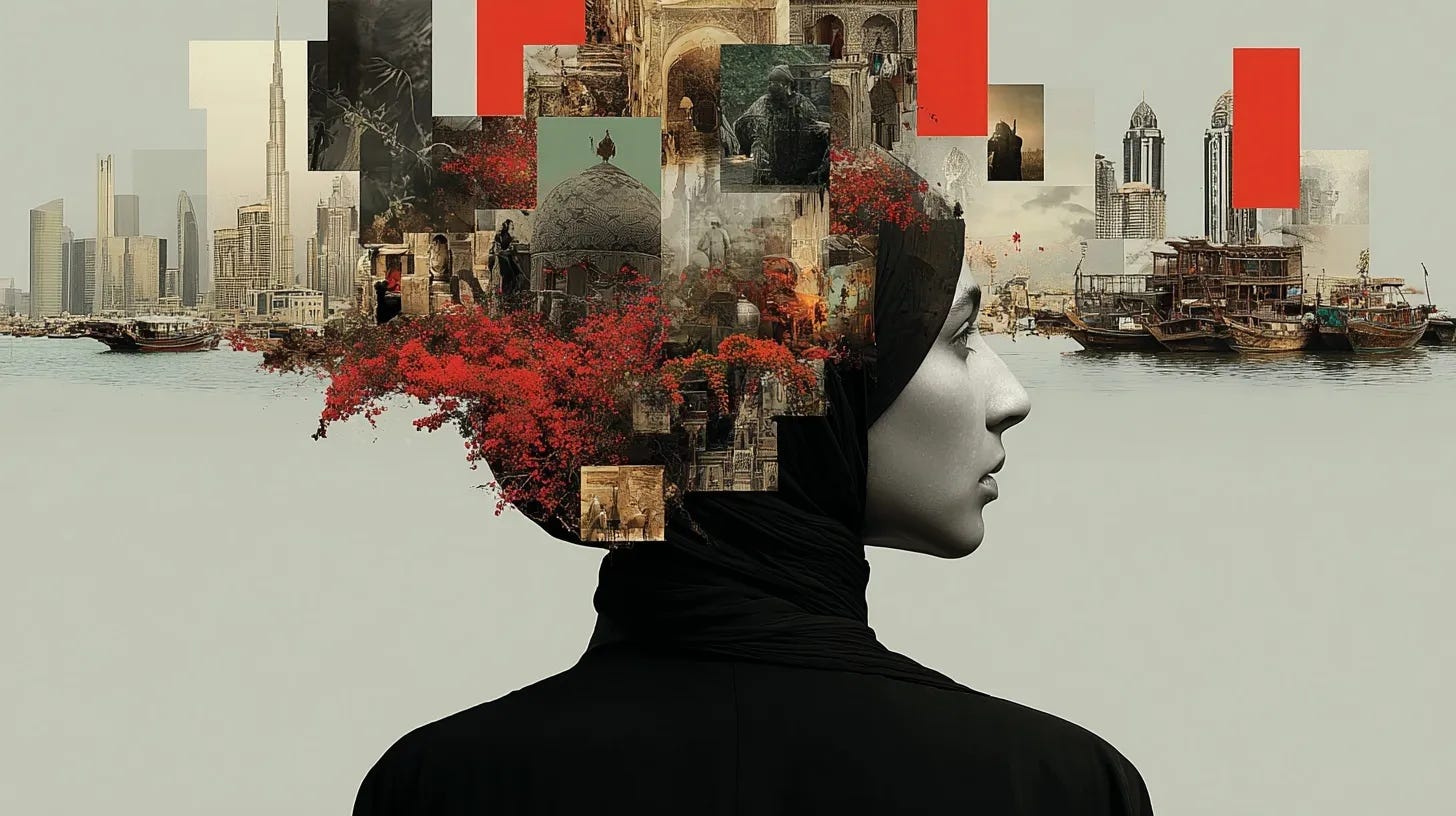
The UAE’s women’s empowerment initiatives have created unprecedented opportunities, and participants in Al Bakeri’s research engaged thoughtfully with how to make these even more effective.
Several women emphasized the importance of merit-based advancement. “What I appreciate is genuine empowerment,” one woman explained. “When women earn their roles through competency, everyone benefits—the women themselves, their organizations, and future generations who see authentic role models.”
The most forward-thinking participants recognized that true empowerment requires more than policy—it requires infrastructure. They’re advocating for flexible work arrangements, extended parental leave, and accessible childcare not as special accommodations but as smart organizational design that benefits all parents.
“With the right support systems,” one participant noted, “women don’t have to choose between career growth and family connection. They can excel at both.”
These women aren’t complaining about policies—they’re actively shaping the next generation of initiatives through their lived experience and advocacy.
Strength in Cultural Navigation
Being part of an expatriate-majority nation has given Emirati women a unique superpower: cultural fluency. They move seamlessly between the traditional values of their heritage, Islamic principles, modern professional standards, and diverse global perspectives.
“As an Emirati woman, I’ve learned to honor my roots while remaining open to the best of what other cultures offer,” one participant shared. “This isn’t confusion—it’s richness.”
Another woman described how exposure to diverse perspectives has enhanced her parenting and leadership: “Values started to shine in a diverse workforce system—like prioritizing picking up my kids and taking family vacations. I learned to be more intentional about what matters.”
This cultural dexterity positions Emirati women as natural global leaders who can bridge different worldviews and find common ground.
A Movement Across Generations
Al Bakeri’s personal journey illuminates the transformation underway. Her own awakening came through coaching after having three children. “I came to a personal reflection about the significance of ‘Me Time,’” she writes. Initially met with resistance, her honest conversations about stress and the need for personal space eventually won support from her family.
This breakthrough informed not just her research but her relationships. When she shared her findings with her mother and daughter, their reactions captured the intergenerational momentum building in the UAE. Her mother recognized the progress from her own era, while her daughter expressed confidence in her generation’s heightened awareness and determination.
Each generation builds on the previous one’s courage, gradually expanding what’s possible. Al Bakeri dedicated her thesis to her father, who passed away during her studies—a loss that deepened her understanding of resilience and the importance of pursuing one’s dreams despite obstacles.
Lessons for a Changing World
The UAE’s compressed timeline of change—five decades of transformation—offers the rest of the world valuable insights. These Emirati women are pioneering solutions that professional women everywhere can learn from:
Integration over balance. Rather than trying to perfectly balance competing demands, these women are finding ways to integrate their various roles into a coherent whole that honors all parts of their identity.
Cultural authenticity as strength. Maintaining strong cultural roots while embracing progress isn’t a contradiction—it’s a source of resilience and perspective.
Collective advancement. By supporting each other and advocating for systemic changes, these women are ensuring that future generations face fewer obstacles.
Redefining success. Success isn’t just about titles and salaries—it’s about living with integrity, raising thriving families, and creating positive change.
Voice and advocacy. Speaking honestly about challenges isn’t complaining—it’s the first step toward meaningful solutions.
Writing the Future
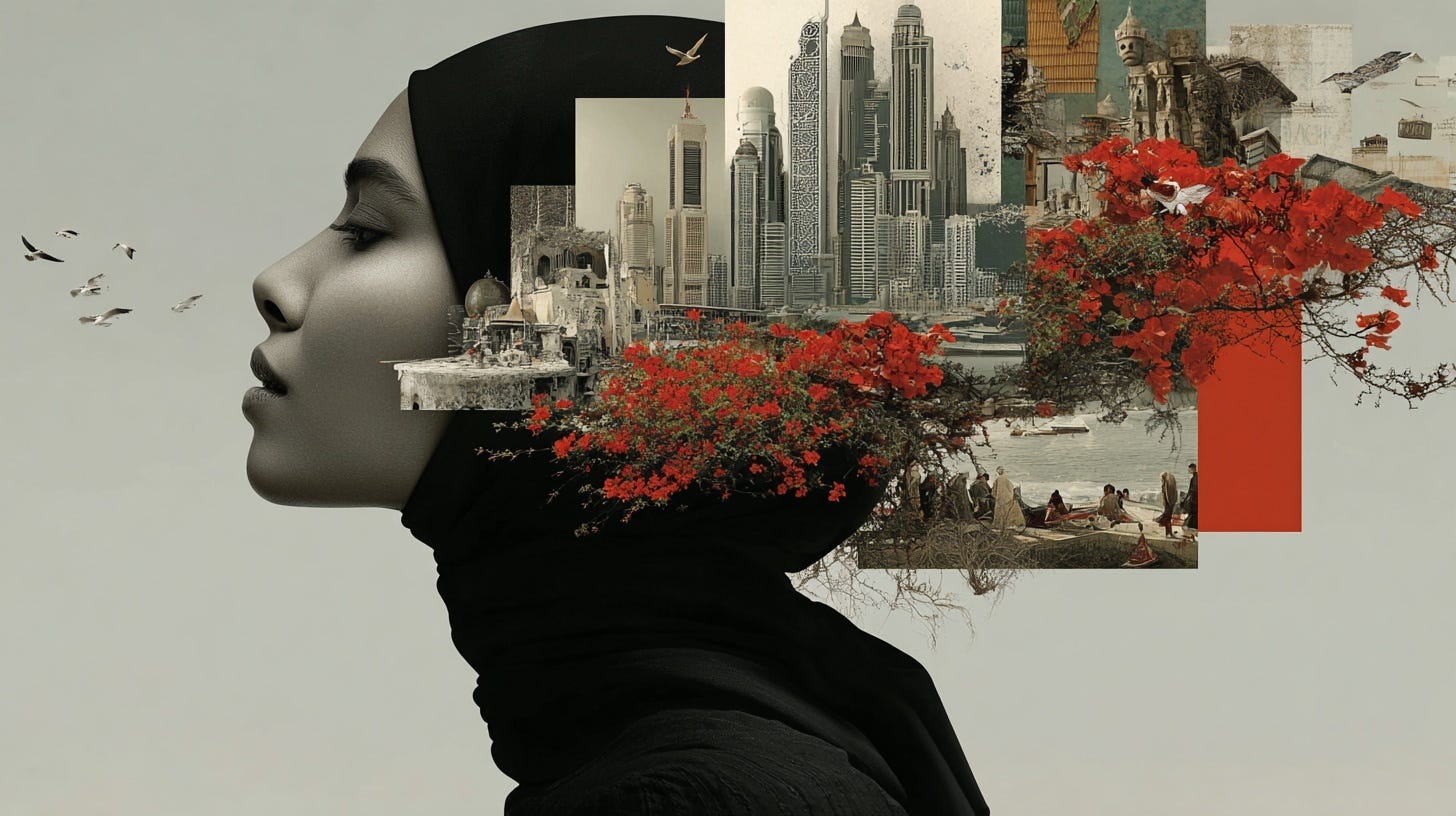
Reflecting on the purpose of her research, Al Bakeri writes:
“My ultimate aspiration for this study is that it resonate with other Emirati women, serving as a reminder that they are not alone in their journey of self-discovery.”
That journey—of honoring tradition while embracing modernity, maintaining cultural identity while pursuing professional excellence, fulfilling family obligations while claiming personal space—represents a universal challenge for women worldwide, particularly in rapidly evolving societies.
The Emirati women in this research aren’t victims of impossible expectations. They’re pioneers creating new pathways, demonstrating daily that it’s possible to be fully Emirati, fully professional, fully devoted to family, and fully themselves.
Their message to women everywhere: You don’t have to choose between the different parts of who you are. The struggle to integrate them is real, but so is the possibility of success. And you don’t have to do it alone.
As we navigate 2026’s conversations about gender equality and work-life integration, these voices remind us that meaningful change happens not just in boardrooms and legislatures but in daily choices to honor our whole selves—our heritage, our ambitions, our families, and our own wellbeing.
The question isn’t whether we can have it all. It’s whether we can create societies, workplaces, and families that make integration possible rather than punishing. The Emirati women in Al Bakeri’s research are showing us it can be done. They’re not waiting for permission—they’re writing the future, one brave choice at a time.
This article is based on Sarah Al Bakeri’s 2023 thesis “Minority Amidst Majority: A Psychodynamic Inquiry into the Identity Challenges of Emirati Professional Women Living as a Minority Amidst a Majority of Expatriates in the UAE,” submitted for her Executive Masters in Change at INSEAD.
References
Al Bakeri, S. (2023). Minority Amidst Majority: A Psychodynamic Inquiry into the Identity Challenges of Emirati Professional Women Living as a Minority Amidst a Majority of Expatriates in the UAE [Master’s thesis, INSEAD].
Al Marzouqi, A. (2011). An exploratory study of the under-representation of Emirate women in the United Arab Emirates’ information technology sector [Doctoral dissertation, Zayed University].
Alrasbi, A. N. J. B. (2017). Understanding the factors that influence Emirati women career development in higher education: Case study from United Arab Emirates [Doctoral dissertation, The British University in Dubai].
Alteneiji, E. (2023). Value changes in gender roles: Perspectives from three generations of Emirati women. Cogent Social Sciences, 9(1), 2184899.
Federal Competitiveness and Statistics Authority. (2020). UAE Population. https://uaestat.fcsc.gov.ae/en
Forster, N., Ebrahim, A., & Ibrahim, N. (2014). An exploratory study of work-life balance and work-family conflicts in the United Arab Emirates. Skyline Business Journal.
Hopkyns, S. L. (2017). A conflict of desires: Global English and its effects on cultural identity in the United Arab Emirates [Doctoral dissertation, University of Leicester].
Long, S. (2018). Transforming experience in organisations: A framework for organisational research and consultancy. Routledge.
Ministry of State for Federal National Council Affairs. (2009). Women in the United Arab Emirates: A Portrait of Progress. Abu Dhabi, United Arab Emirates.
Shaya, N., & Abu Khait, R. (2017). Feminizing leadership in the Middle East: Emirati women empowerment and leadership style. Gender in Management: An International Journal, 32(8), 590-608.
World Economic Forum. (2012). The Global Competitiveness Report 2012-2013. Geneva.
World Economic Forum. (2013). The Global Competitiveness Report 2013-2014. Geneva.